


Exploring the Spectrum of Chatbot Use Cases Across Every Industry
 Andrew BurakCEO and Founder at Relevant Software
A few years ago, chatbots meant clunky scripts and canned replies. That is not the conversation anymore. More than 987 million people now use AI chatbots, and the market sits at roughly $12 billion in 2026. Generative and conversational AI moved bots from FAQ machines to assistants that hold context, reason across tasks, and stand in for a human agent. As a result, chatbot use cases now reach far beyond answering common questions.
Chatbots now carry different capabilities and serve many purposes across industries. Demand for conversational AI chatbot development services keeps rising, and the functions of bots expand with it. Below are the strongest chatbot use cases, with examples of how organizations across industries use them to grow.
Evolution of Chatbots: From Simple Scripts to AI-Powered Assistants
Modern AI-based chatbots, as we know them, have come a long way from their humble beginnings.
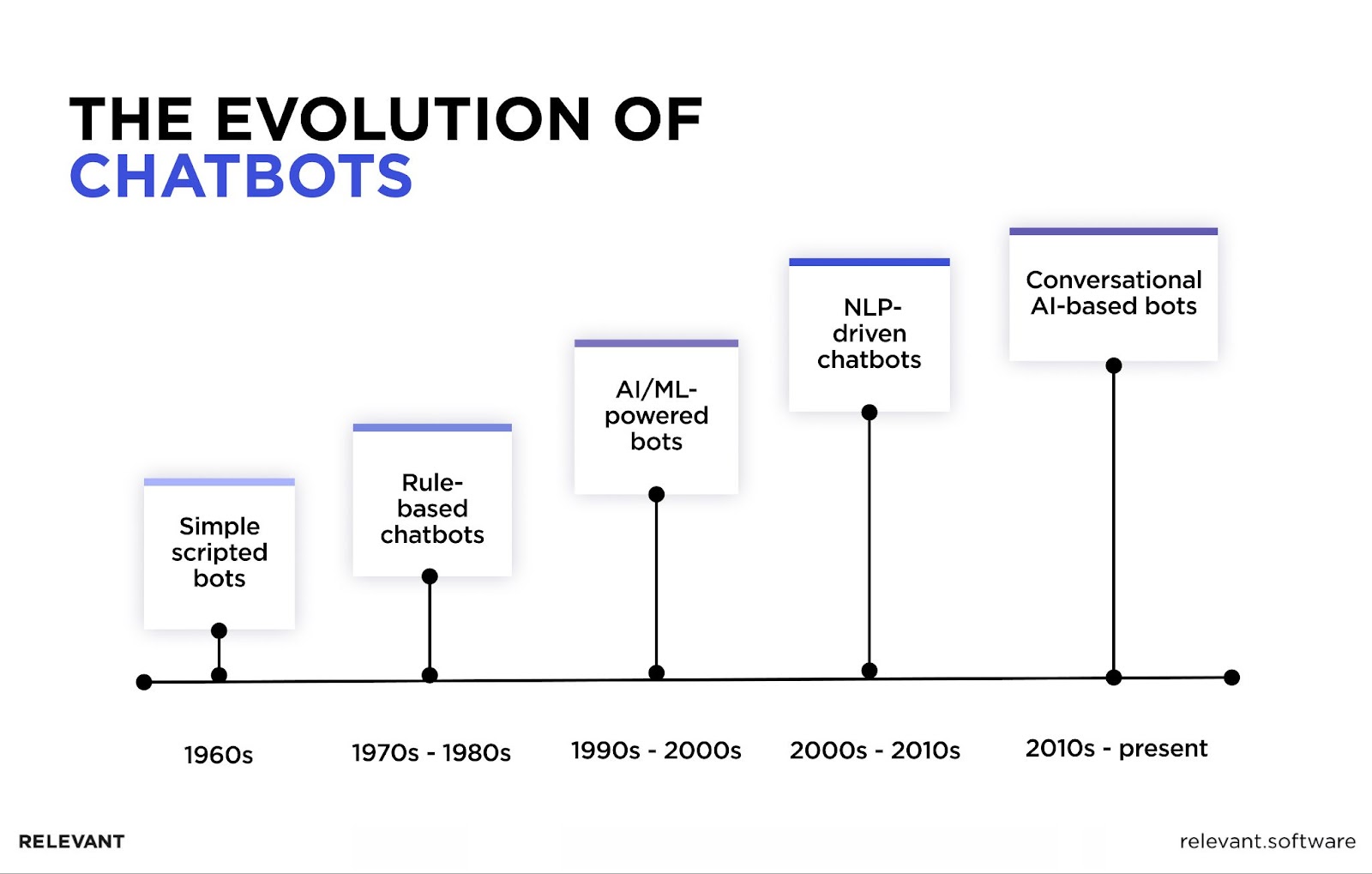
Simple scripted bots (1960s)
The first chatbot, Eliza, created in 1966, was a rudimentary program that could only respond to a limited set of pre-programmed inquiries and commands. The earliest bots could answer some basic user questions, like return policies or business hours, but they quickly hit a wall when faced with anything beyond their pre-programmed scripts.
Rule-based chatbots (1970s – 1980s)
Then came rule-based bots, which expanded the capabilities of their predecessors. They could analyze keywords and phrases to understand the general meaning of a user’s question, not just match keywords to give canned responses like scripted bots. Another advancement of rule-based chatbots was the ability to engage in simple branching conversations. Following pre-defined rules to navigate basic decision trees, they could ask follow-up questions or offer different responses based on the user’s input.
Emergence of AIML scripting technology (1990s – 2000s)
The development of Artificial Intelligence Markup Language (AIML) marked noticeable advances in approaches to building chatbots. ALICE, developed in the mid-1990s, was a prominent example of a chatbot that used basic natural language processing (NLP) and AI to simulate human-like conversations. It could reply to a broad range of topics and queries.
NLP-powered conversational agents (2000s – 2010s)
The introduction of NLP algorithms and deep learning models brought a real transformation of the bots into intelligent assistants. NLP technology lets chatbots interpret human language more accurately, understand the context, and engage in more natural conversations with users.
Conversational AI-driven chatbots (2010s – present)
AI and machine learning gave the chatbots the ability to learn from their interactions with users and improve their responses over time. Such bots can understand user needs, remember their preferences, and provide user data to personalize interactions.
Yet, the latest and most advanced technologies that have changed our perception of bots were – large language models (LLMs) such as GPT (generative pre-trained transformer). These models understand nuanced language and generate original, human-like responses. If you have used OpenAI ChatGPT or a tool like Gemini or Claude, you know how far this technology has come.
Top Chatbot Use Cases
With customers’ expectations regarding online shopping experiences and customer support services reaching new heights, AI-driven chatbots are now being more often used to improve customer experience, scale conversational capabilities, and more.
So, how can chatbots benefit your company? We’ve created a list of the most popular and impactful chatbot use cases from different sectors. Let’s examine each one to discover chatbot ideas for your business.
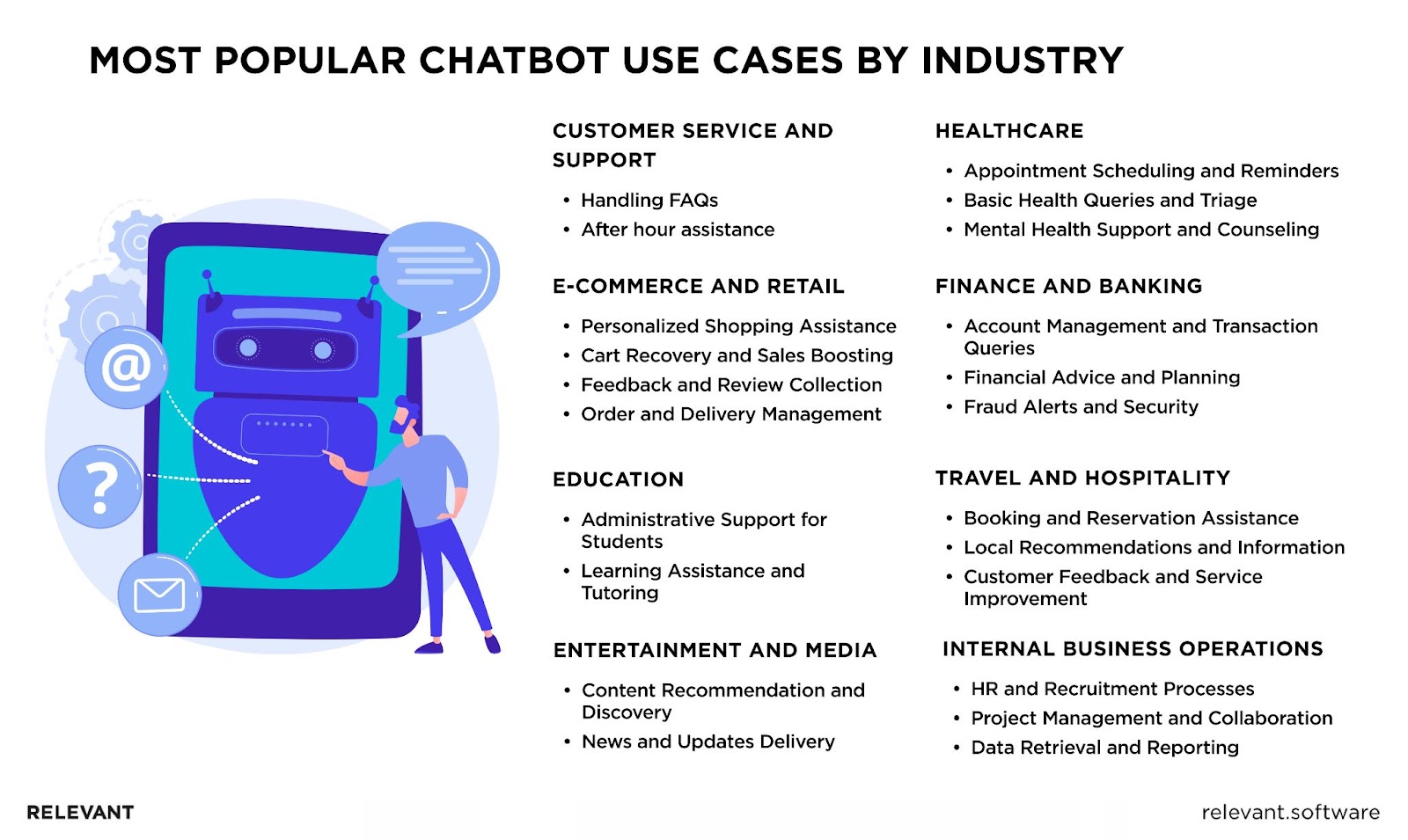
Customer Service and Support
Customer service is one of the key business functions where conversational AI is used extensively. Bots can easily cope with thousands of customer queries and increase the level of satisfaction with your company. Here are some of the common chatbot use cases for customer service:
- Handling Frequently Asked Questions (FAQs)
Chatbots can ease the pressure on your customer support team by answering simple requests and FAQs. Nearly 68% of consumers say they enjoyed that chatbots give instant answers to simple queries. Solutions like Smart FAQ make it easier for customers to find the information they need quickly and easily. Meanwhile, your business can save costs and accelerate response times to improve customer experience.
- After-Hours Assistance
Chatbots can help you offer 24/7 customer service without requiring additional resources or agents working at night. By the way, 64% of users appreciate the chatbot’s round-the-clock service, as they can get help whenever needed. Even if the customer query is too complicated for the bot, it can tell when your customer support agents will be able to help, minimizing the customer’s frustration.
E-commerce and Retail
Since most purchasing activity today happens online, employing AI assistants is a good way to connect with your clients and keep them engaged. So, it’s not surprising that we can find numerous e-commerce chatbot use cases, from product recommendations to order tracking. Here are some common chatbot use cases in retail and e-commerce:
- Personalized Shopping Assistance
The right recommendation for your customers is a sure way to increase your sales, as well as identify upselling and cross-selling opportunities. Bots offering personalized recommendations based on shoppers’ past purchases are among the top ecommerce chatbot use cases. This sole reason makes bots very popular among e-commerce business owners. Such virtual assistants like the one developed by eBay – ShopBot – understand users’ browsing habits or ask questions at the beginning of the conversation to learn what they are looking for and suggest relevant products.
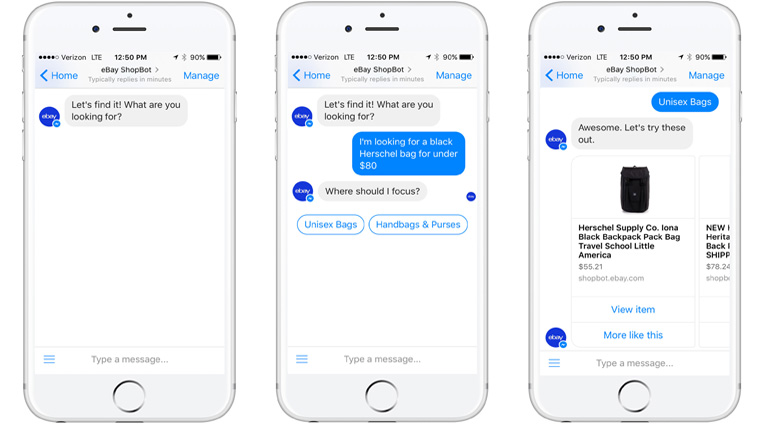
Source: Ebay
- Cart Recovery and Sales Boosting
A sales chatbot can be set up to proactively reach your clients and offer them assistance. For example, one of the chatbot use cases is customer onboarding, which helps your new buyers understand how your service works. But the best part of these bots is that they can remind your customers that their order is unfinished and ask them if they have issues with completing a purchase. You can be surprised how effective this feature can be in lifting up your sales.
- Feedback and Review Collection
Customer feedback is important for every brand. Yet, gathering reviews through surveys with lengthy forms that require shoppers to type in answers is the same as climbing Mount Everest in flip-flops – technically possible, but needlessly difficult and likely to discourage participation. Chatbots are a perfect way to make feedback collection simple, frictionless, and quick. They can communicate with clients to record complaints or suggestions without requiring too much effort from their side.
- Order and Delivery Management
Conversational AI chatbots simplify order processing as they can check the stock availability and automatically record orders if the product is available. They also help your buyers complete the purchase and send order confirmations. Order tracking is another vital feature offered by bots that most customers value. Zalando, a European fashion brand, successfully uses it to provide instant order tracking for its clients right after they’ve made a purchase.
Healthcare Applications
Compared to other industries, chatbots in healthcare are more popular and widespread. They can help with medication management, save time on admin work, and schedule appointments. According to Business Insider, AI chatbots can automate 73% of healthcare administrative tasks. Due to this, we can find many healthcare chatbot use cases.
- Appointment Scheduling and Reminders
This is one of the chatbot use cases in healthcare that makes appointment booking for your patients simple and fast. AI assistants offer 24/7 self-schedule opportunities that save both patients and medical staff valuable time. Most appointment bots send reminders and confirmations, which minimize no-shows and ultimately save you costs and resources.
- Basic Health Queries and Triage
Healthcare professionals can reduce the workload on their staff by having a chatbot answer common health queries. More than that, healthcare bots can offer basic medical assistance, recognize the symptoms, and provide an appropriate course of action. If it identifies the potential for serious health issues, the bot recommends visiting a doctor and can schedule an appointment for the patient straight from the chat.
- Mental Health Support and Counseling
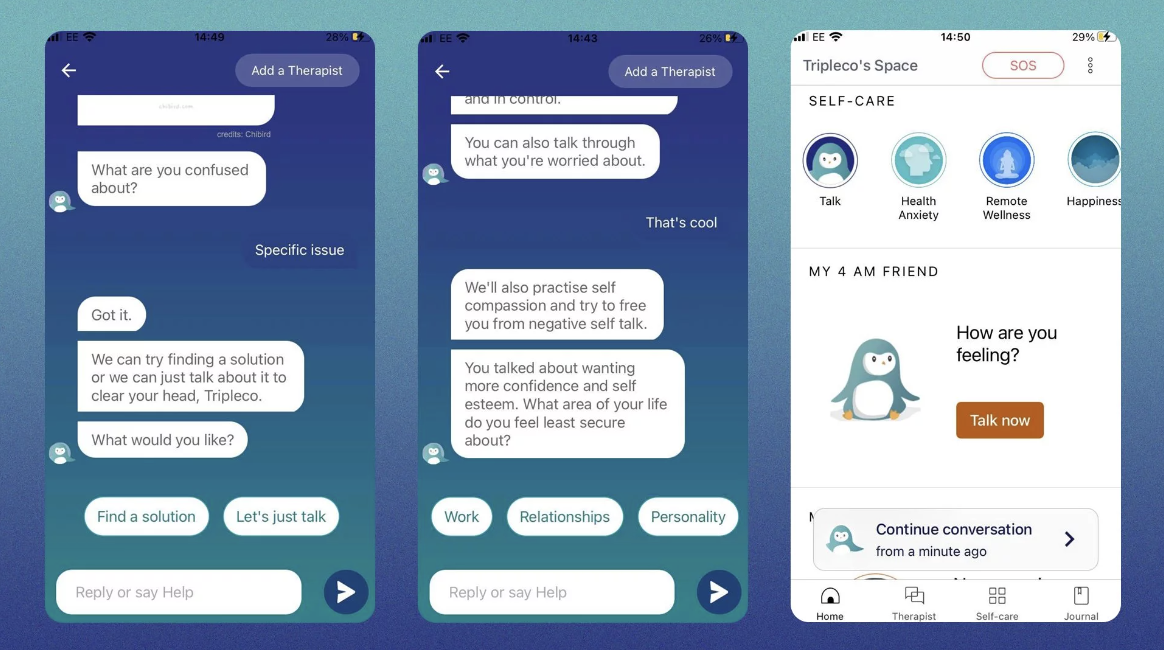
Among the many healthcare chatbot use cases, mental health is one of the most promising. Chatbots like Wysa and Woebot offer a safe space to express anxieties and stress through personalized conversations laced with psychology techniques. They suggest calming practices like meditation, tailor support based on each interaction, and even encourage CBT exercises to help patients manage their emotions effectively.
Source: Thred.com
Finance and Banking
Even the conservative world of finance has embraced AI assistants. Instead of robotic menus and long hold times, banks now explore chatbot use cases well beyond a balance check. Adoption is high: most Tier 1 North American banks already run AI chatbots.

- Account Management and Transaction Queries
Bank chatbots let customers peek into their finances – check details, view reports, and gain control. This digital shift resonates with clients, as 61% interact weekly with their banks via digital channels, according to PwC. Wells Fargo Banking Assistant, for instance, simplifies banking operations and helps clients stay on top of their finances. This use case of chatbot solution provides a complete account analysis view by delivering information on credit scores and spending trends.
- Financial Advice and Planning
Chatbots can act as financial advisers and help clients make decisions concerning their investments. They analyze people’s spending habits, income, retirement plans, and current wealth to recommend smart investment decisions. MyEva bot was designed specifically for this purpose.
- Fraud Alerts and Security
For banks and fintech firms, protecting sensitive information is a top priority. Bots help banks keep track of the customers’ account operations for any suspicious activity. AI bank chatbots scan transactions, and if they detect warning signs, they instantly alert both the client and the bank.
Travel and Hospitality
Even with a wealth of information available, users still require assistance with travel-related questions and with staying informed about changing international practices. Chatbots can be widely employed in this market to offer a wide range of chatbot use cases.
- Booking and Reservation Assistance
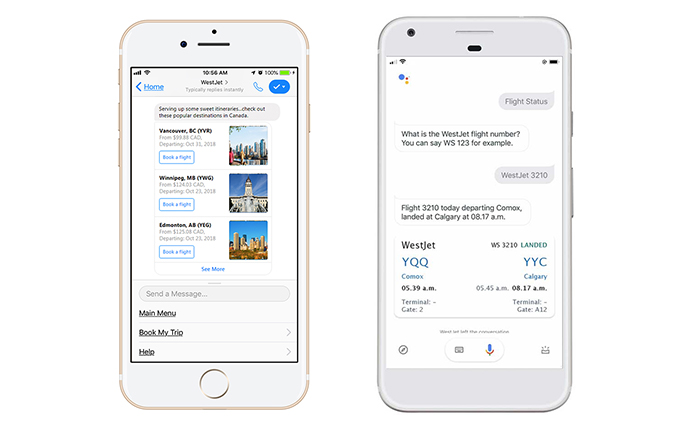
Making reservations requires a lot of time when planning a trip. Travel assistants like West Jet’s Facebook bot can book flights, manage reservations, and plan their trips. All your clients need to do is provide the desired departing and arriving dates, their destination, and the number of travelers.
Source: Travelweek.ca
- Local Recommendations and Information
Travel agencies can use chatbots to recommend travelers places to visit, secret viewpoints, or the best restaurants nearby based on their criteria and parameters. They use local data and customer preferences to build personalized city experiences. Engati has built such a travel bot that gives recommendations on where to spend vacations.
- Customer Feedback and Service Improvement
Chatbots are an excellent means of gathering user feedback and creating a high level of engagement that motivates users to fill out surveys. This helps you better understand the customers’ wants and ensures that your services meet their expectations.
Education and Learning
Conversational AI has reached education, too. So what can it do for academic institutions?
- Administrative Support for Students
Chatbots can respond to frequently asked queries and assist students with administrative tasks like answering enrollment questions, offering program advice, and navigating complex school policies. By automating these routine tasks, both students and administrators will have to deal less with paperwork and have more time for academic support.
- Learning Assistance and Tutoring
Another use of bots that proves valuable in education is tutoring. These chatbots assess the learning styles and abilities of students to tailor lectures to their individual needs. It helps ease student’s difficulties in learning and get an education at the pace they’re comfortable with.
Internal Business Operations
Many businesses develop AI-driven virtual assistants for internal use to advance their company’s goals. Here are the best chatbot use cases to help your enterprise save time and energy that can be better allocated for business-critical tasks.
- HR and Recruitment Processes
Hiring, onboarding, self-service inquiries about holidays, salary, or sick leaves, and employee satisfaction surveys are some of the common HR chatbot use cases. With AI assistants like Botbot.AI, companies can make onboarding less stressful and more enjoyable for newcomers, while hiring managers can streamline most of the process and have more time to focus on interviews and closing offers.
- Project Management and Collaboration
Forget endless meeting threads and calendar conflicts! Chatbots like Meekan help you automate team scheduling, suggesting times that work for everyone and booking meetings with a single chat. Streamlining approvals and syncing calendars, these AI assistants let teams focus on collaboration, not logistics.
- Data Retrieval and Reporting
Enterprise chatbots for internal use provide easy access to critical data across teams. They help employees retrieve sales figures, inventory levels, and customer insights in seconds instead of spending hours looking through endless reports.
Entertainment and Media
The entertainment and media industry doesn’t stand by when it comes to adopting smart chatbot technology. Making the correct use of this technology lets them increase exponentially their reach.

- Content Recommendation and Discovery
By analyzing user preferences and real-time trends, intelligent chatbots recommend movies, music, or articles relevant to each user’s tastes with impressive accuracy. This drives user engagement and satisfaction while your agency reaps the rewards of increased customer loyalty and boosted content consumption.
- News and Updates Delivery
Employing a bot that features the top or latest news stories helps news publications like The Washington Post increase user engagement. Readers, on the other hand, can get more personalized newsfeeds and relevant content on the topics they’re more interested in.
Chatbot Use Cases: Final Thoughts
Chatbot use cases vary by industry. Some businesses use bots to handle FAQs, others to automate whole operations. The point is to find the application that returns the most for your company. And the trend is clear: as chatbots turn into full AI agents, more organizations are working out how to make a chatbot to scale their business.
If you’re about to build your first chatbot, expert guidance and technical support from Relevant Software come in handy. By opting for our AI chatbot development services, you get peace of mind. From design and development to ongoing maintenance, our team works side-by-side with you to deliver a solution according to your expectations.


