


How to Transform Your Hospital into a Smart Hospital
 Andrew BurakCEO and Founder at Relevant Software
Hospitals no longer treat connected technology as an experiment. In early 2026, 75% of U.S. health systems had at least one AI solution in production, up from 59% a year earlier (Eliciting Insights, 2026). Funding follows the same curve. U.S. digital health startups raised $14.2 billion in 2025, a 35% jump over 2024, with AI-enabled companies capturing 54% of every dollar (Rock Health, 2026).
The hardware layer is scaling just as fast. The Internet of Medical Things (IoMT) market is on track to near $300 billion by 2030 (Fortune Business Insights, 2026), tying monitors, pumps, beds, and location tags into one operational network. Together these shifts define the modern smart hospital.
This guide explains what a smart hospital is, the benefits it delivers, and the concrete steps to build one. If you plan to develop the software behind it, our healthcare software development services team works with hospitals, device makers, and digital health companies on exactly this.
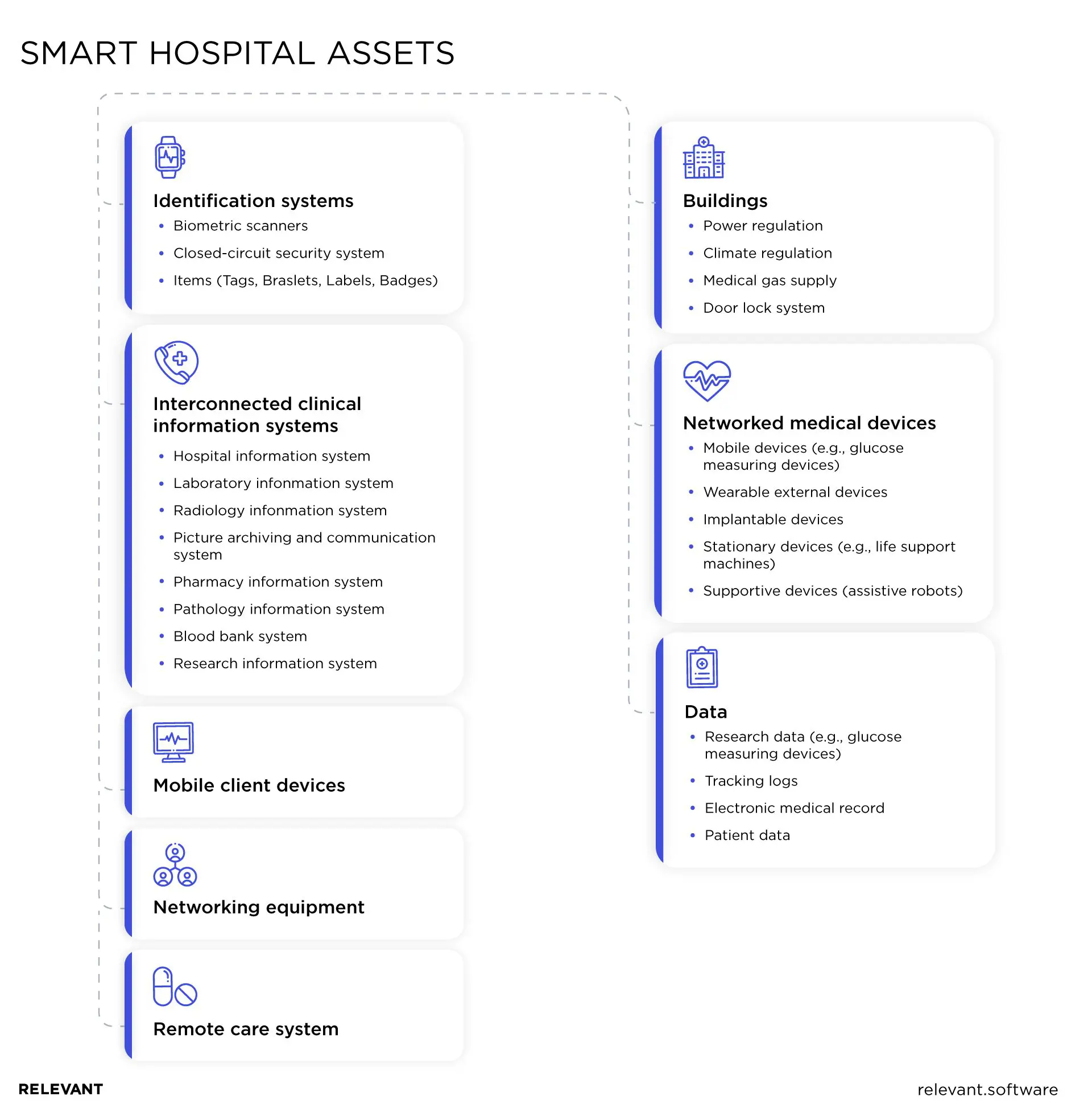
What Is a ‘Smart’ Hospital?
A smart hospital runs on a highly automated, optimized environment. Internet of Things technology sits at its core.
What separates a smart hospital from a legacy one is a network of connected devices. That network raises the efficiency of the whole system and improves patient care.

At its best, a smart hospital works as one organism. Staff deliver advanced care at lower cost and with fewer errors.
Now let’s look at the main benefits.
Benefits of ‘Smart’ Transformation
Some major gains:
Improved patient engagement
Smart screens in patient rooms let people and their families track health status and key metrics. Patients get more involved in their own treatment, and the experience improves.
Improved diagnostics
Smart hospital technology gives doctors better data to reach accurate diagnoses and pick the right treatment. AI models embedded in IoMT platforms now flag arrhythmias, sepsis risk, and imaging anomalies in real time, while software automates the most complex workflows.
A smart hospital lets you add new technology to your team’s work and sharpen legacy diagnostic methods at the same time.
Optimized workflows
Mobile technology and the Internet of Things raise team efficiency. They also give staff clear tools to track and fix problem areas in the workflow.
Using data analytics
Connected devices collect large volumes of biometric data. You can use that data to understand your patients, their behavior, and their well-being.
Over time, that same data helps your team work more effectively and keeps patients more satisfied.
Providing patients with remote medical care
Smart devices let you track patients even outside the hospital. Remote monitoring supports hospital-at-home programs, now the fastest-growing care model thanks to expanding CMS reimbursement through 2026.

For example, the system spots a sharp rise in a patient’s blood pressure and alerts the doctor. The doctor then contacts the patient and offers guidance.
Enhanced patient safety
Real-time analysis of biometric data can save lives, especially for patients on life support.

If the system detects a critical condition, it alerts the nearest staff to respond.
Now let’s cover what you can do to make your hospital smart.
Making Your Hospital ‘Smart’
Some examples:
1. Implement networked medical devices
A network of connected devices is the circulatory system of any smart hospital.
Mobile devices such as glucose meters and wearables such as wireless temperature monitors join a single network. That network collects biometric data, supports remote monitoring, and improves management. Secure firmware and encrypted communication matter here, since connected medical devices are now a prime target for attackers. Our guide on IoT firmware development covers the security basics.
[rws-cta id=”6922″]
2. Implement AI and Big Data
Machine learning models support diagnosis by analyzing large data sets, which cuts the risk of human error.
Data also predicts the course of many diseases. That lowers the chance of new complications and eases the load on your system.
Strategic use of data streamlines workflows too. Analyzing hospital records helps you improve the operating room schedule and keep teams organized and productive.

3. Implement robotic surgery
Robotic-assisted surgery supports hundreds of successful procedures. It makes teamwork more efficient and improves patient outcomes.
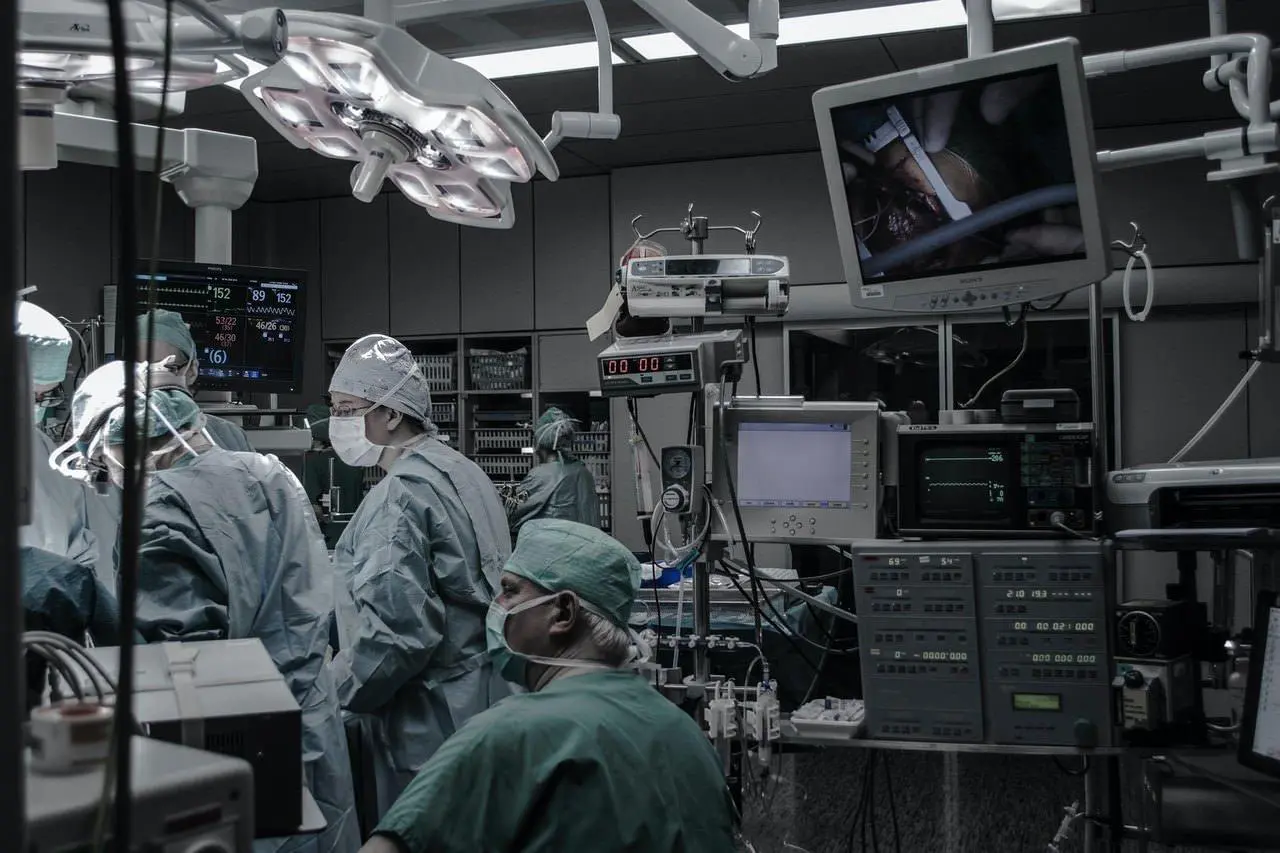
Many hospitals now use robotics to treat uterine fibroids, prostate cancer, heart disease, and more.
4. Improve preventive health management
Smart hospital technology and programs that analyze and treat chronic disease support prevention. That makes the whole system more efficient and effective.
Over the long term, it also reduces your team’s workload.
5. Improve chronic care management
Wearable devices monitor chronic patients, such as people with diabetes or high blood pressure. You collect biometric data and treat them effectively, even at a distance.

Wrapup
Transforming your hospital into a smart hospital is one of the best ways to make it more efficient and effective.
A network of wearable and mobile devices, backed by IoMT technology, raises staff productivity, improves patient engagement, sharpens diagnostics, and streamlines workflows.
Here are the main ways to make your hospital smarter:
- Build a unified network of wearables, mobile, and medical devices
- Implement AI and Big Data solutions
- Add robotic surgery assistants
- Develop remote patient monitoring software
- Strengthen preventive health management
- Strengthen chronic care management
- And more…
Want to go further on the smart hospital path or hire professional IoT developers? Contact us.


